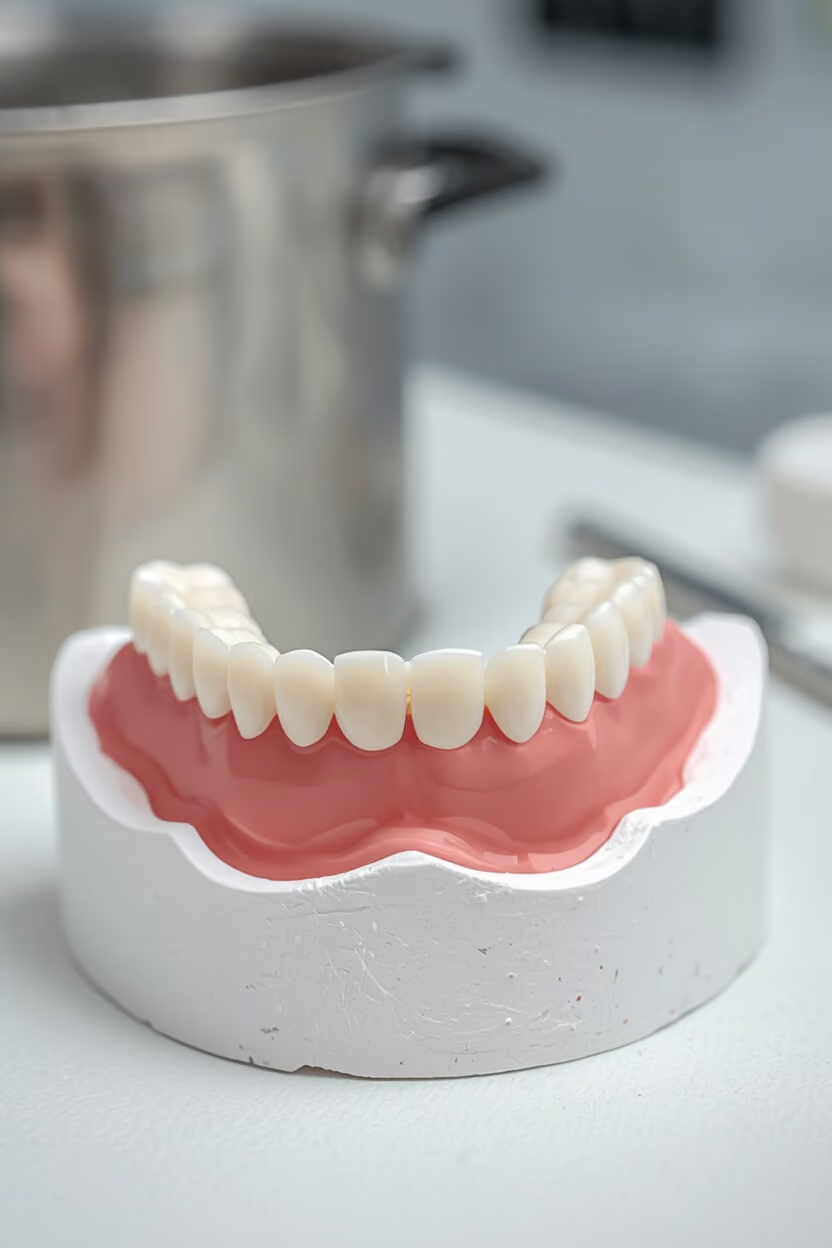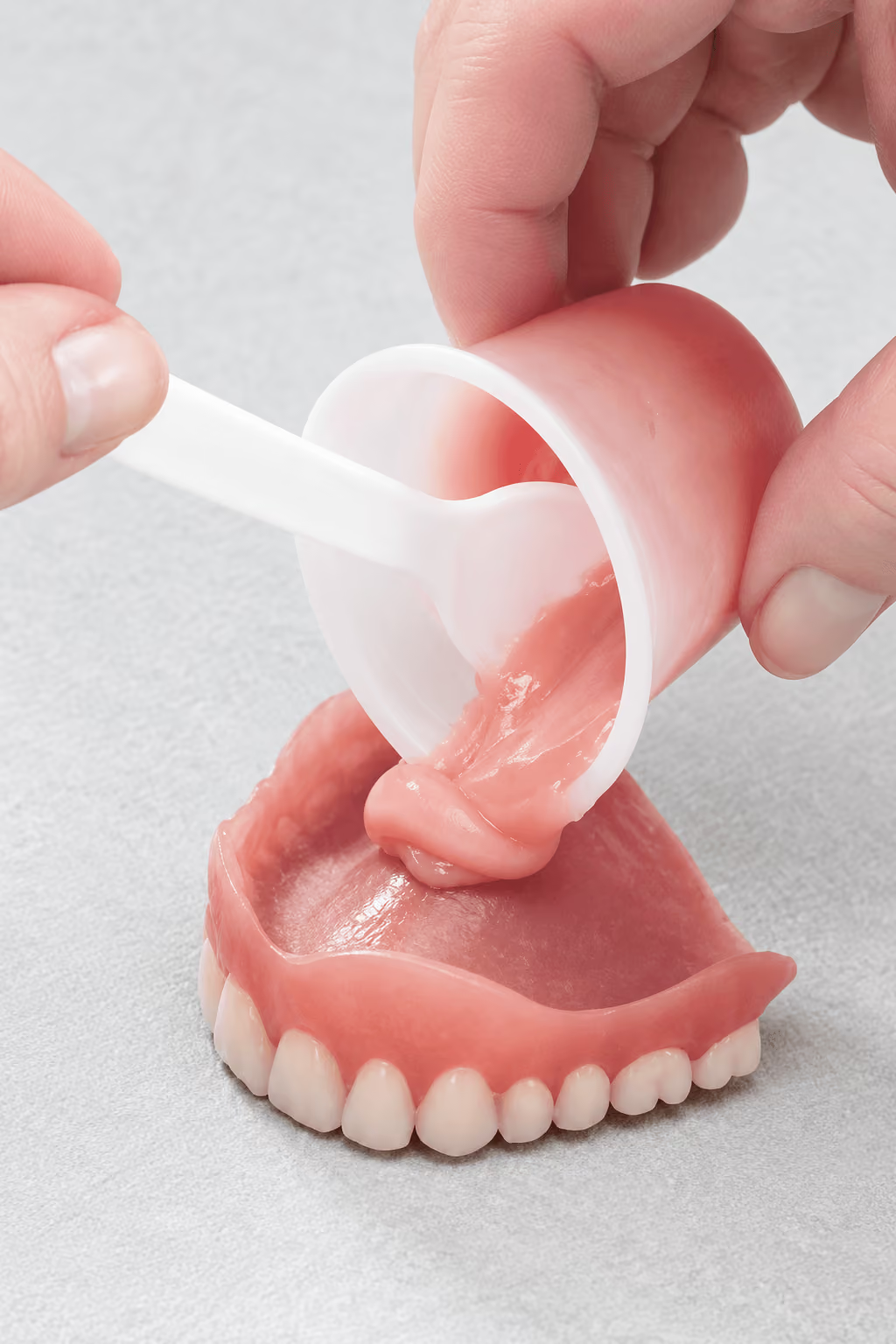
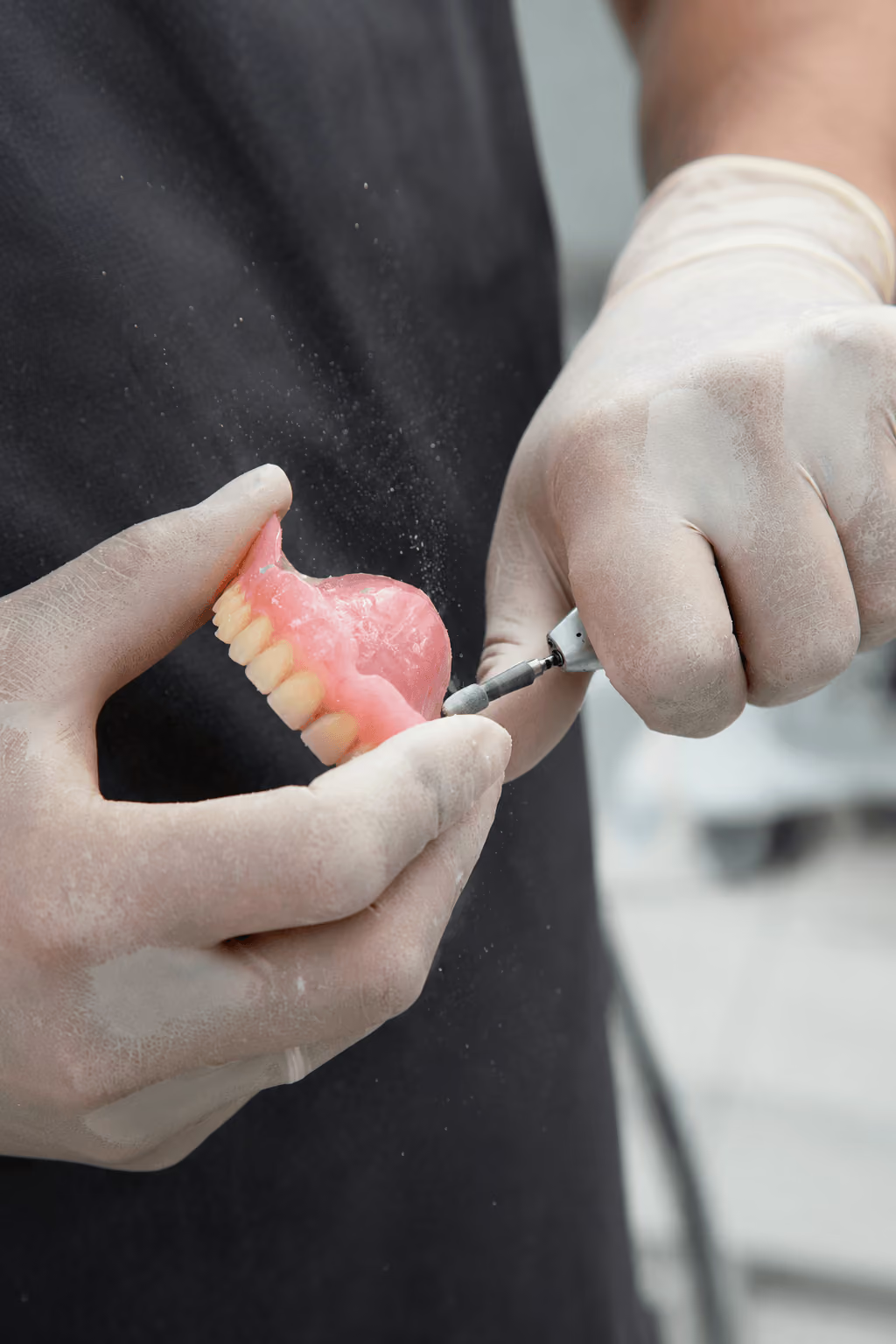
Fast, reliable repair services for fractures, broken teeth, or damaged frameworks, plus adding teeth to existing partial or complete dentures.
Get Started
3–5 Days
N/A (Receive existing prosthesis)
N/A
Our repair and addition services address broken bases, cracked flanges, loose teeth, and damaged clasps. When patients lose additional teeth, we can seamlessly add replacement teeth to their existing prostheses, restoring function and aesthetics quickly.
We don't just glue prostheses back together. We analyze the fracture line to determine the cause and reinforce the repair internally if necessary. For additions, we meticulously match the new acrylic and teeth to the existing prosthesis, making the addition look original.
Repairs and additions require the physical prosthesis in the lab. We take physical impressions of the addition space directly on the existing denture to ensure a perfect tissue fit for the new addition.
Every repair is checked for proper alignment, even occlusal contacts, and smooth tissue surfaces. Additions are verified for perfect shade match, occlusal harmony, and smooth blended margins.
A repair addresses localized damage to an existing appliance, such as a fracture or broken component. A rebase is a more extensive procedure in which the denture base material is replaced while retaining the existing tooth arrangement when clinically appropriate.
Clearly identify each requested modification on the prescription and provide the existing appliance along with the records needed to establish the intended tooth position, occlusion, and retention. When multiple modifications are requested, documenting each change separately helps the laboratory process the case according to the prescription.
A repair is intended to address localized damage to an existing appliance. If the denture has significant deterioration, repeated fractures, extensive base problems, or broader changes that cannot be appropriately addressed through a localized repair, a rebase or new prosthesis may be more appropriate. The existing appliance and clinical requirements should be evaluated before selecting the treatment approach.
Identify the affected clasp and the desired repair or replacement in the laboratory prescription. If the repair involves a framework component or requires a new retention element, provide any relevant clinical or design instructions so the laboratory can determine the appropriate fabrication approach.
In some cases, an existing partial can be extended by adding a replacement tooth and appropriate retention rather than fabricating an entirely new appliance. The suitability of the existing partial and the clinical situation should be evaluated before requesting the addition.
The existing appliance and a clear laboratory prescription should be submitted. Depending on the case, an impression or model of the appliance in the patient's current oral relationship, an opposing record, and a bite record may also be required. Specify the tooth position and any relevant shade or tooth-selection information.
Yes. Send all available pieces of the fractured appliance with the case. Keeping the original pieces together can help the laboratory evaluate the fracture and reproduce the original relationship of the appliance components.
Send the existing denture or partial, the completed laboratory prescription, and any relevant broken pieces or components. Clearly identify the area of damage and the requested repair. For cases involving tooth additions or changes that affect occlusion, additional records may be required.
Include specific clinical observations and instructions with the laboratory prescription. Information about occlusion, vertical dimension, stability, pressure areas, border extension, or other concerns helps determine whether the case can be addressed through a reline or requires a different treatment approach. Relining is primarily intended to address an inadequate tissue fit when the existing prosthesis remains otherwise suitable.