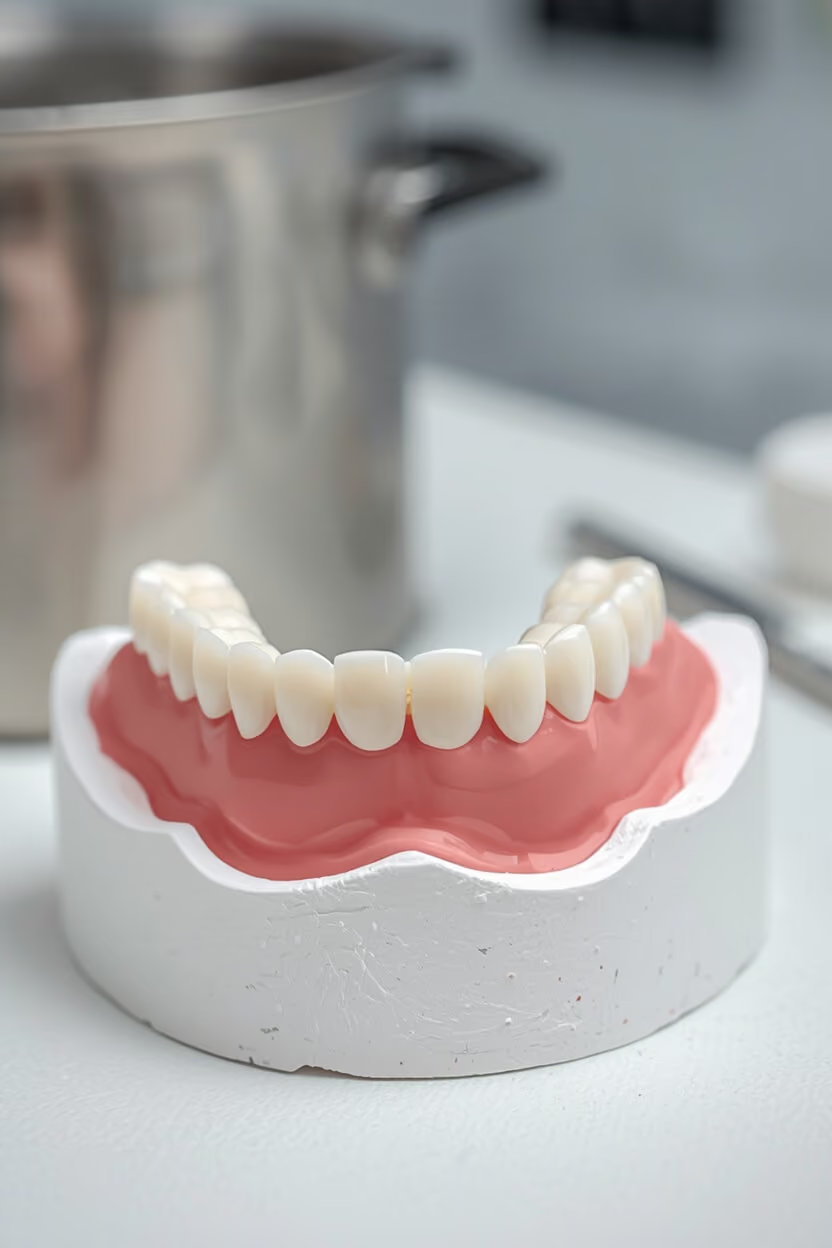
Professional relining services to restore denture and partial fit and function as oral tissues change, improving patient comfort and retention.
Get Started
3-5 Days
N/A (Receive existing prosthesis)
STL files (for digital relines)
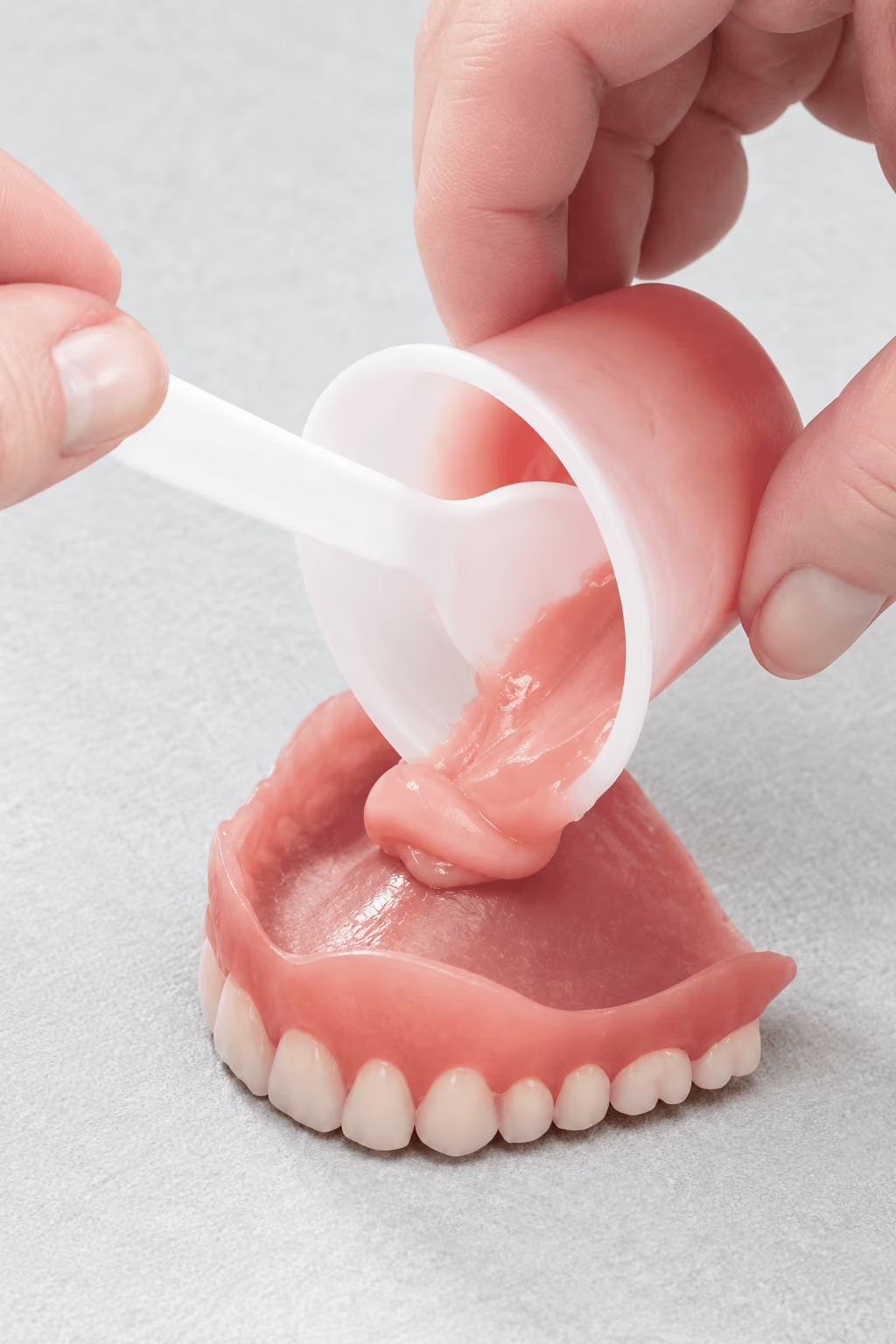
As alveolar ridges resorb, dentures and partials lose fit and stability. Our reline services use premium materials to restore the tissue surface, extending the life of the prosthesis and improving patient satisfaction without the cost of a complete remake.
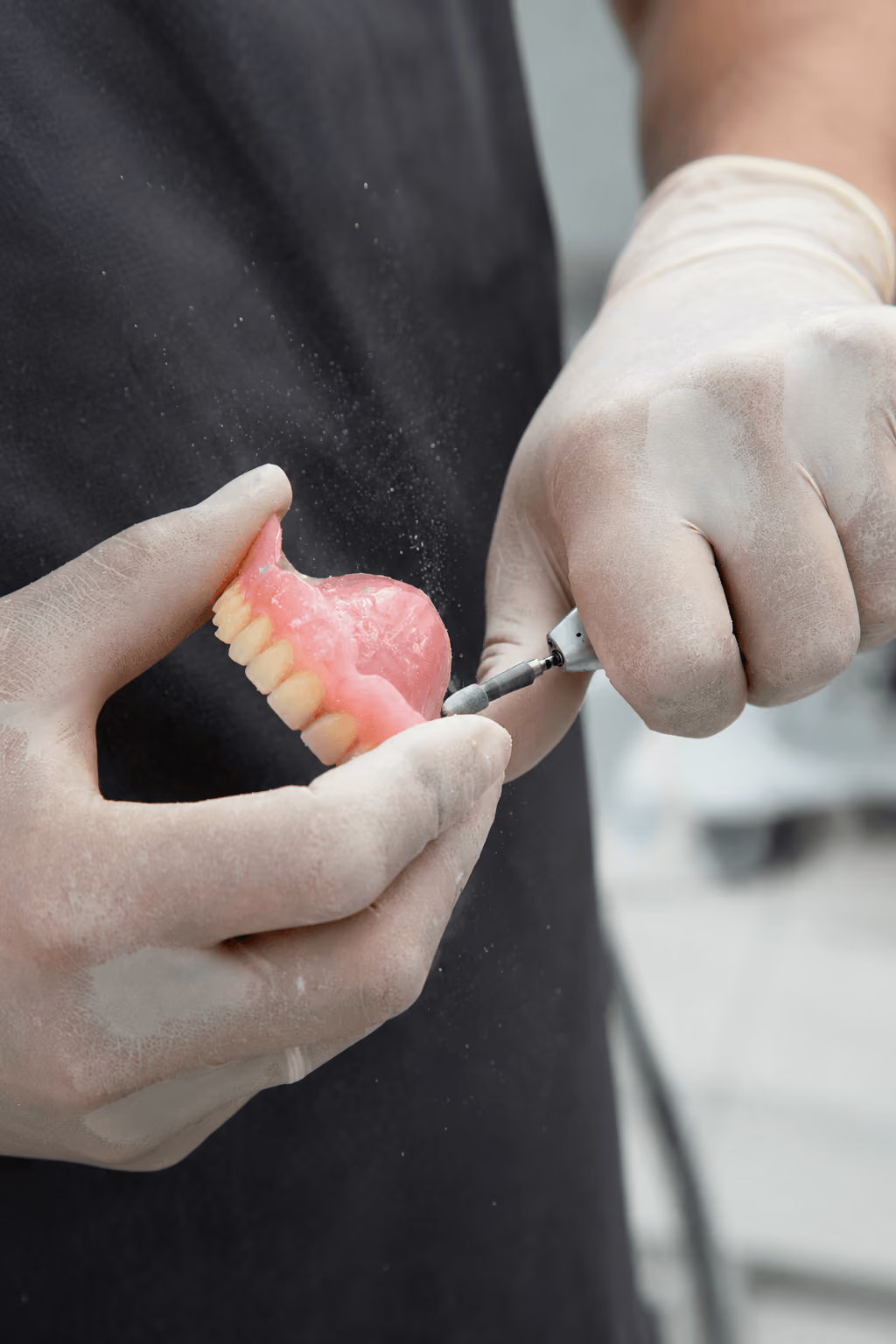
We use only premium, low-odor, and highly stable reline materials that resist porosity and maintain their color over time. Our technicians meticulously trim and polish the reline margins to ensure a seamless transition and prevent tissue irritation.
For digital relines, we accept the existing prosthesis scan (STL) along with a tissue scan. We design the new tissue surface digitally, mill the negative, and process the reline for precise, uniform thickness.
Hard relines are checked on the master cast for even tissue adaptation and proper border extension. All margins are polished to a high shine to ensure patient comfort and hygiene.
Evaluate whether the existing tooth arrangement, occlusal relationship, denture fit, and overall prosthesis remain suitable for retention of the existing teeth. If the existing occlusion or jaw relationship requires significant correction, a new denture may be more appropriate than a rebase.
A rebase may be appropriate when the existing denture's teeth and overall arrangement remain suitable, but a more extensive replacement of the denture base is needed. A reline modifies the tissue-facing surface, while a rebase replaces the denture base material more extensively.
Viva Tech Dental Lab accepts digital scans as part of its laboratory workflow. For a reline case, the specific digital records required depend on the appliance and clinical workflow. If you are planning to submit a reline digitally, confirm the required scan records with the laboratory before submission. Digital denture workflows can incorporate scans of the existing prosthesis along with opposing and bite records when required.
Include specific clinical observations and instructions with the laboratory prescription. Information about occlusion, vertical dimension, stability, pressure areas, border extension, or other concerns helps determine whether the case can be addressed through a reline or requires a different treatment approach. Relining is primarily intended to address an inadequate tissue fit when the existing prosthesis remains otherwise suitable.
Yes. Denture and partial reline cases can be submitted when the existing prosthesis remains serviceable but requires correction of its tissue fit. The laboratory prescription should clearly identify the appliance and requested reline service, along with the records needed to process the case.
The appropriate reline material depends on the patient's clinical condition and the purpose of the reline. Hard relines are generally used when a definitive correction of the denture's tissue fit is appropriate, while resilient soft materials may be considered when additional cushioning or relief is needed for sensitive or compromised tissues. The clinical findings should guide the selection.
A reline is generally considered when the existing denture remains serviceable but its tissue fit has changed. Before submitting the case, evaluate retention, stability, occlusion, vertical dimension, esthetics, tooth condition, and the condition of the denture base. If these factors cannot be adequately maintained or corrected through a reline, a new prosthesis may be more appropriate.
The reline impression should capture the patient's current tissue relationship with the existing denture properly seated. The denture should be positioned according to the intended clinical occlusion while the impression material records the tissue-bearing surface. Follow your preferred clinical technique and include the completed denture and prescription with the case.
Provide the laboratory prescription, the existing denture, the reline impression or other required clinical records, and any relevant instructions regarding fit, tissue areas, occlusion, or changes requested. Clear documentation helps the laboratory understand the intended result and process the case appropriately.