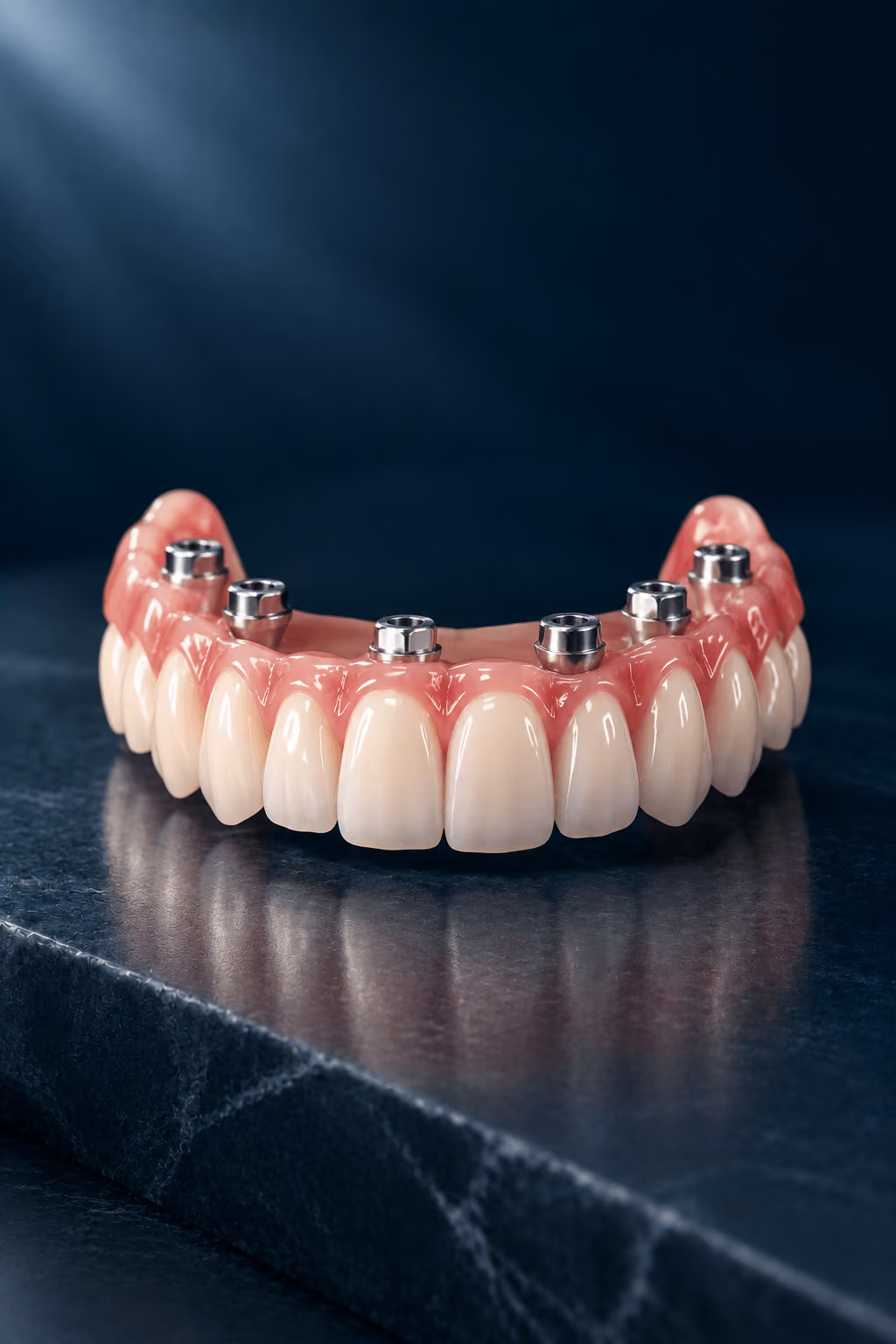
Precision-fabricated screw-retained hybrid dentures combining CAD/CAM technology, titanium bar frameworks, and premium denture teeth.
Get Started
15–18 business days
Available — confirm case requirements
Available — confirm required implant files
Viva Dental Lab provides screw-retained hybrid dentures for full-arch implant rehabilitation. The restoration combines a CAD/CAM-milled titanium bar with a definitive denture incorporating premium denture teeth.
Both handcrafted and digital production options are available, allowing the laboratory workflow to be matched to the needs of the clinical case.
Hybrid denture cases require accurate implant information, careful framework design, and precise integration between the titanium bar and definitive denture. Our workflow combines digital fabrication with detailed laboratory quality control to support predictable full-arch restorations.
Digital implant scans and case records can be incorporated into the CAD/CAM workflow. The bar and prosthetic design are digitally planned before fabrication.
The completed restoration is inspected for framework quality, prosthetic integration, occlusion, tooth positioning, finishing, and overall fabrication quality.
Do not approve the final prosthesis until the discrepancy has been addressed. Document the required changes and provide a new or corrected jaw-relation record when necessary. A new try-in may be required to verify the revised arrangement before final processing.
An existing prosthesis can provide useful reference information for tooth position, contours, occlusion, and esthetics when planning a replacement. Clearly identify which aspects should be retained and which should be changed, and provide the additional records required for the new case.
Yes. Viva Tech Dental Lab accepts digital scans as part of its laboratory workflow. For an implant-supported full-arch case, the digital submission should include the appropriate implant-related records, opposing-arch information, jaw relation, and prescription. Confirm the required scan and component records with the laboratory before capturing the case.
Evaluate the fit of the trial prosthesis, vertical dimension, centric relation, occlusion, tooth arrangement, esthetics, phonetics, and midline. If the jaw relationship or tooth arrangement needs correction, communicate the required changes to the laboratory before approving the final prosthesis.
A try-in allows the clinical team to verify factors such as implant/framework fit, vertical dimension, occlusion, tooth arrangement, esthetics, phonetics, and midline before the final prosthesis is processed. If changes are required, they can be identified before final fabrication.
Provide the laboratory prescription along with the records required to establish implant position, opposing-arch relationship, jaw relation, and the intended tooth arrangement. Depending on the case and workflow, this may include digital scans or conventional impressions, bite records, an opposing model, and clinical photographs. Confirm the required record set with the laboratory before the restorative appointment.
Provide the implant system, implant positions, applicable multi-unit abutment information, and any relevant component specifications. The laboratory should have enough information to identify the correct restorative interfaces before fabrication begins.